The initiative required 1,000,000 signatures from EU Citizens to be heard by the European Commission to demonstrate significant public support for the movement. The deadline for the movement is 31 July 2025.
1753970340
days
hours minutes seconds
until
Deadline for SKG’s Signature Requirement
SKG began to falter due to misleading online controversies, leaving the initiative at around 500,000 signatures by mid-June. Recent videos covering the topic from large influencers have bolstered widespread support for the movement.
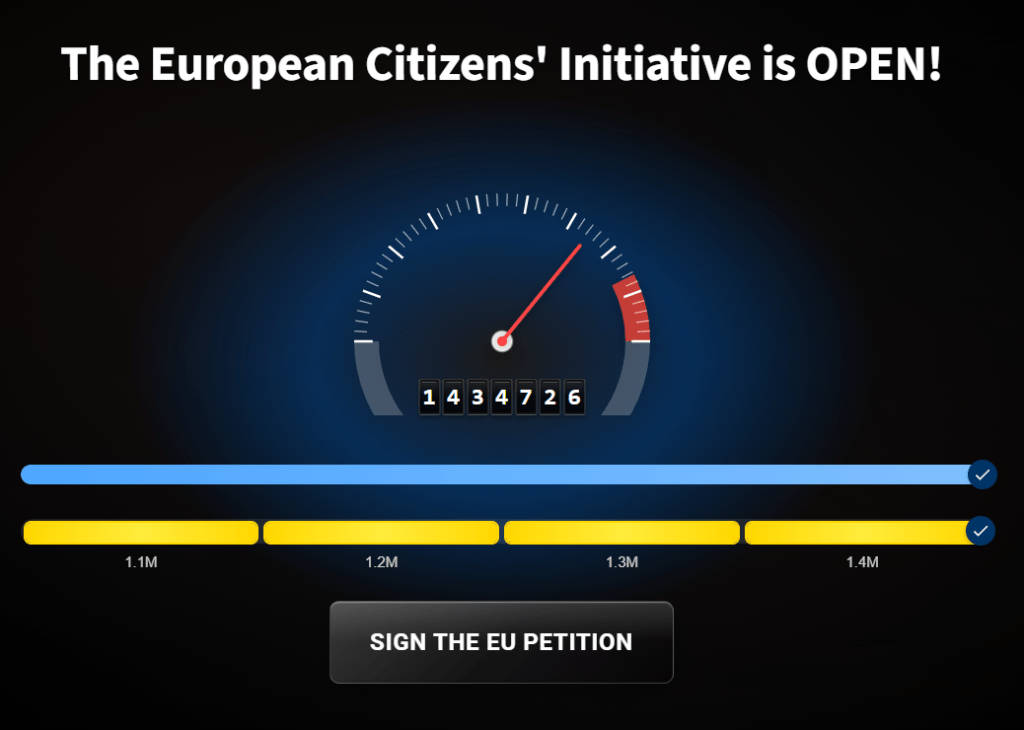
The initiative crossed the threshold earlier this month and has since surpassed the stretch goal of 1,400,000 signatures to account for any invalidated by the Member States.
At the writing of this blog, the movement has 1,434,726 signatures and serves as a critical foundation to consumer protection rights in the EU, with the potential to set precedent should the matter continue to escalate through legal and political channels.
Xbox has come under fire for its ironic use of generative AI in advertising…
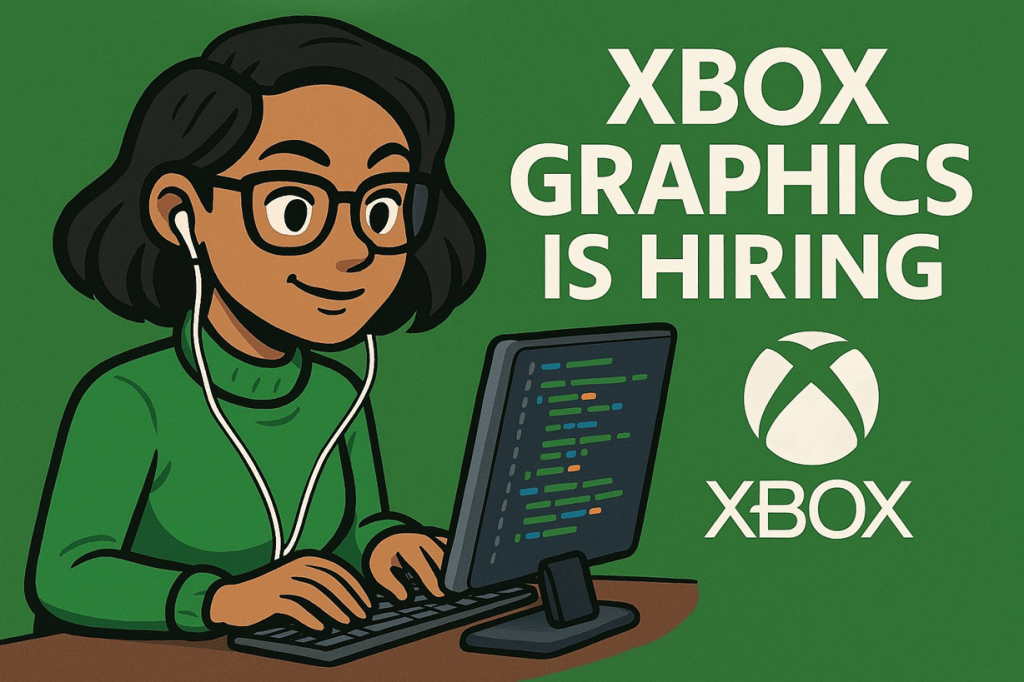
What has felt like a slap in the face for artists this month, an Xbox employee has gone viral for posting a job listing looking to hire someone for a role in the graphics department.
The kicker? The post was accompanied by a graphic created using generative AI, a tool that is arguably a detriment to the careers of graphic designers worldwide. The biggest indication of the use of AI is the visualisation of text displayed on the back of the monitor, which, as we know, is not how we use computers.
Image Source:LinkedIn(note: at the date of this blog, the post has been removed)
To add salt to the wound, this post comes just days after an announcement from Microsoft where they confirmed they had laid off over 15,000 employees this past year, and were quoted as telling employees to “Invest in your own AI skilling.”
This concerns many tech and gaming fans alike, as it indicates a move to a reliance on generative AI, which often lacks the quality, emotion and originality that our fellow humans bring to projects, which is obvious in even something as simple as a job listing.
A PUBG team faces backlash over an offensive name
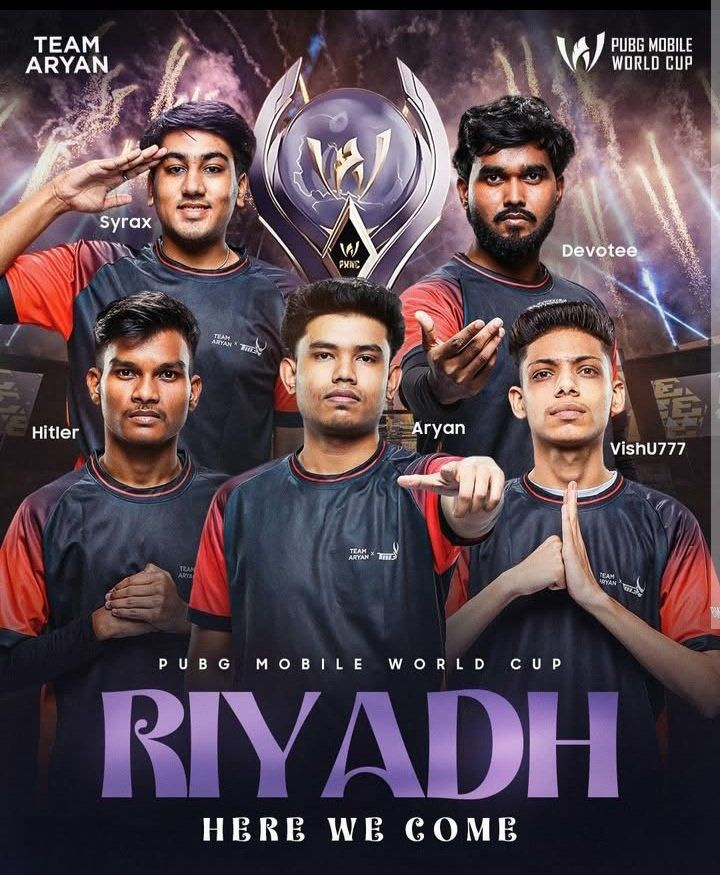
Team Aryan, a PUBG Mobile esports team from India, has become controversial. One player’s username was listed as Hitler when attempting to enter the PUBG Mobile World Cup 2025. While the team name of “Aryan” had already sparked critical discussions in the gaming community because of its association with the racial concept of the same name that emerged in World War II, its primary defence came from the fact that in Sanskrit, Aryan means “noble” or “educated”. Now that the player is forced to change his offensive username to Henry, people suspect it wasn’t as innocent as once believed.
Team Aryan have also made the choice to change their team name to AxTMG to avoid further association with nazi ideology, and Henry has since apologised via Instagram for his previous alias, stating:
“I want to sincerely apologize for my previous esports ID. And apologize to anyone who’s hurt by it.
It was highly insensitive and hurtful. And I used it without fully considering the weight and historical pain associated with it. It was never my intention to offend anyone or glorify anything negative. I have changed my esports ID to Henry.
Thank you to those who helped me realize this. I’m committed to making sure I represent myself and the esports community with more awareness and respect moving forward.”
Image Source: Previously on Instagram, but has since been removed
Islanders: New Shores – a calm, positive launch
Islanders: New Shores, a sequel to Islanders, was released earlier this month on the 11th to warm reactions from the community.
The Islanders series is a relaxing, city-building management game where you develop a city on select islands with minor roguelite elements. Its charming art style, mixed with bits of strategy and planning required, makes it a well-balanced and easy to learn experience.
Islanders: New Shores boasts several unique buildings over its predecessor, a boon system, an updated scoring system and more for a rounded experience that will last you many hours.
Check out Islanders: New Shores on Steam for $14.50 (AUD).
A YouTuber faces possible jail time for reviewing retro games on handheld consoles
Italian YouTuber Once Were Nerd, known for focusing on retro gaming and exploring old titles in big series such as Mortal Kombat, Tomb Raider, and Super Mario, faces possible jail time for allegedly violating Italian Copyright Law.
In his video, Francesco Salicini, the man behind One Were Nerd, describes the alleged violation that authorities raided his property in April, seizing about 30 consoles and Salicini’s phone. The suspected law that Salicini had violated, as he explains in his videos that bizarely Italian law enforcement are not required to disclose what the charge is, is Article 171 of the Italian Copyright Law, a law written in 1941 with a maximum punishment of up to three years of jail time and a fine of 30 million Italian Lira — or €15,000 in modern currency.
It is believed that the consoles used to emulate retro games are the reason for his brush with the law, as laws regarding the ownership of ROMs are unclear: whether they are legal or illegal to own or even promote, which the latter is what Salicini may be perceived as doing in his YouTube videos.
Many discussions around this situation have supported Salicini, with users often criticising the Italian justice system for attempting to punish someone owning an emulator rather than the companies producing and earning a profit from selling these handheld consoles.








 What's Yappening?
You must be logged in to post a comment.